
Le Tan Duy
I am a senior Electrical Engineering student at Ho Chi Minh City International University (VNU-HCM) (Class of 2026) and a passionate AI researcher. I specialize in bridging the gap between classical industrial automation (PLC & Model Predictive Control) and advanced Deep Learning architectures.
Conference Presentations
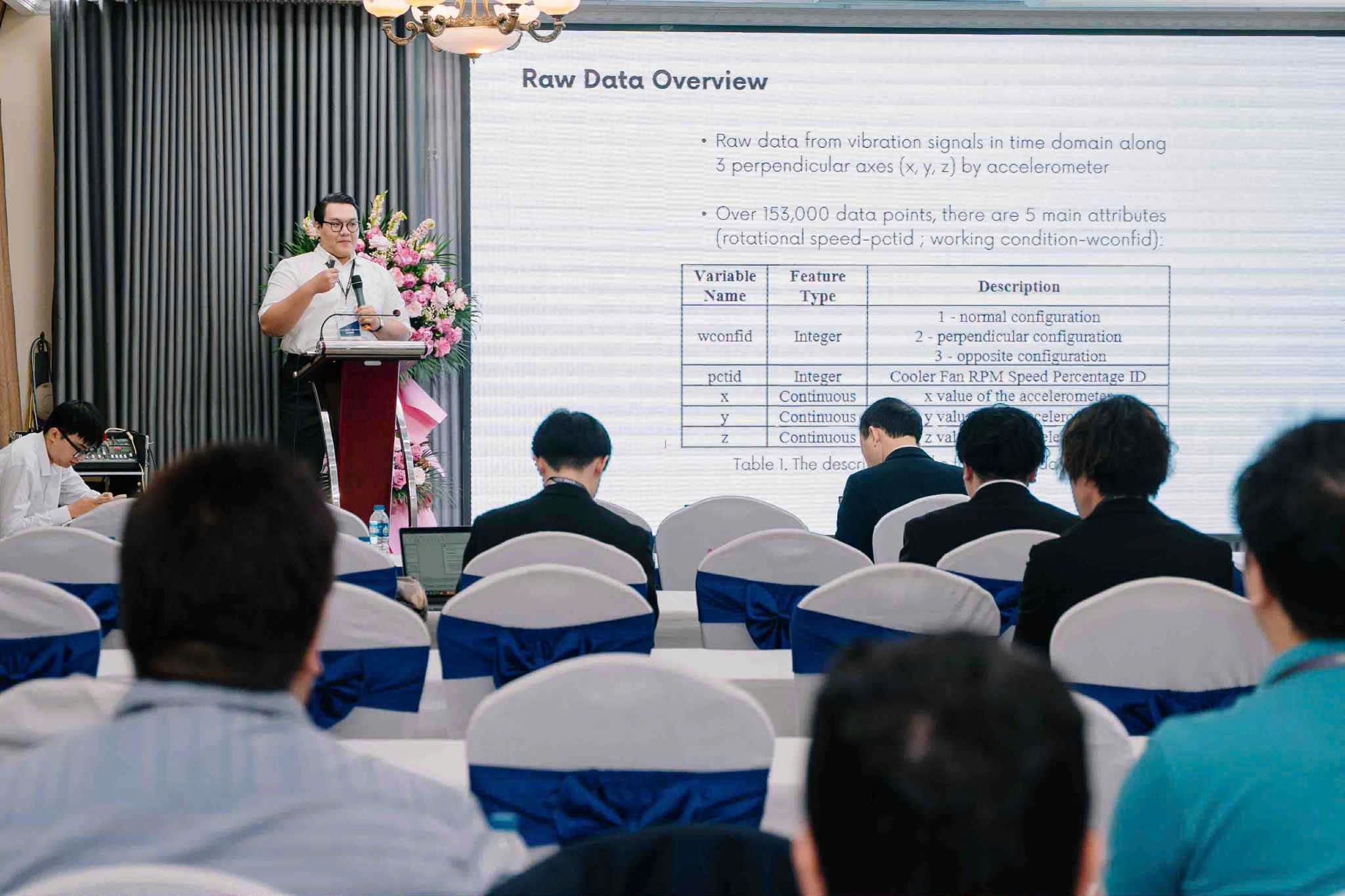
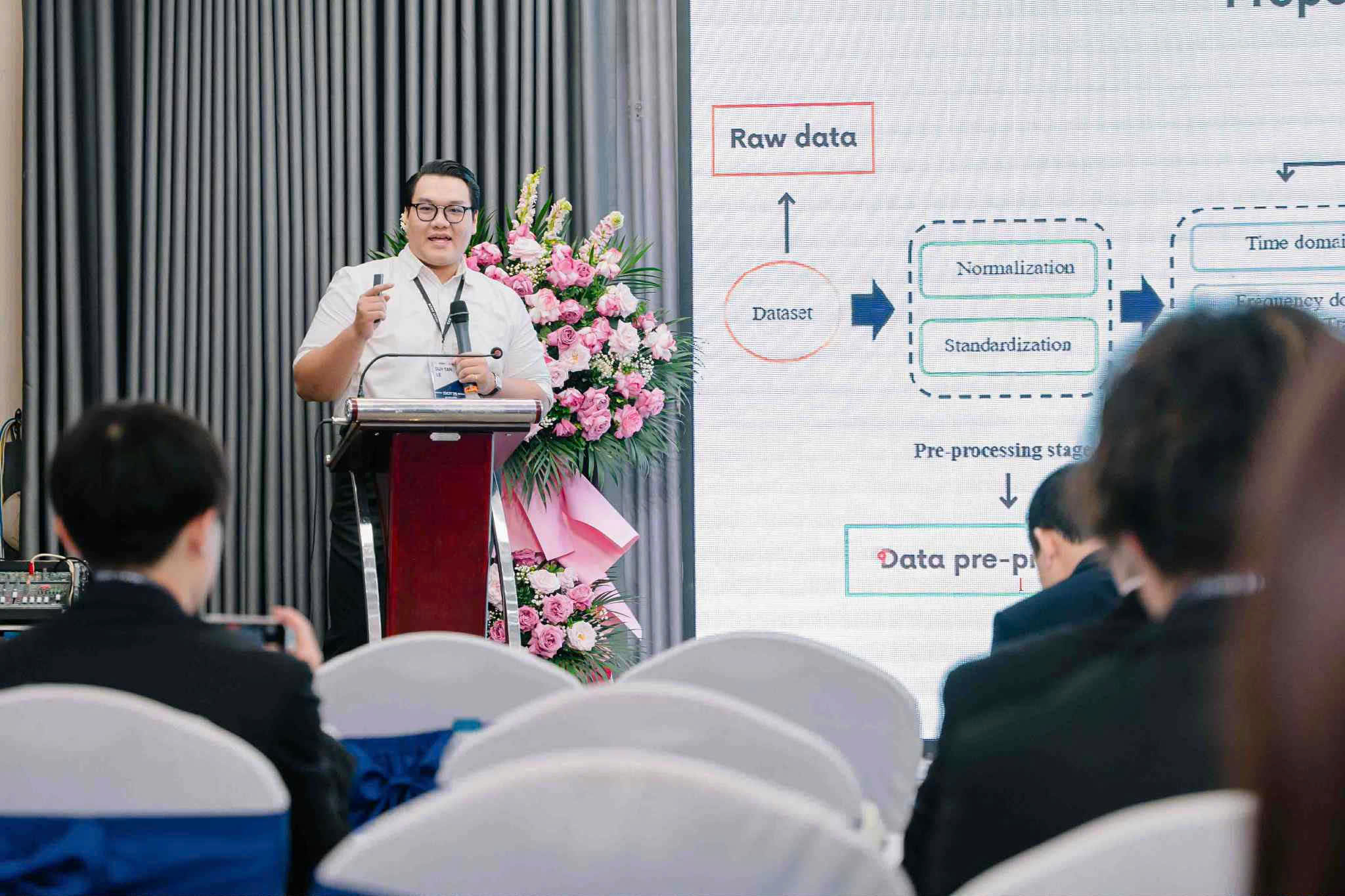
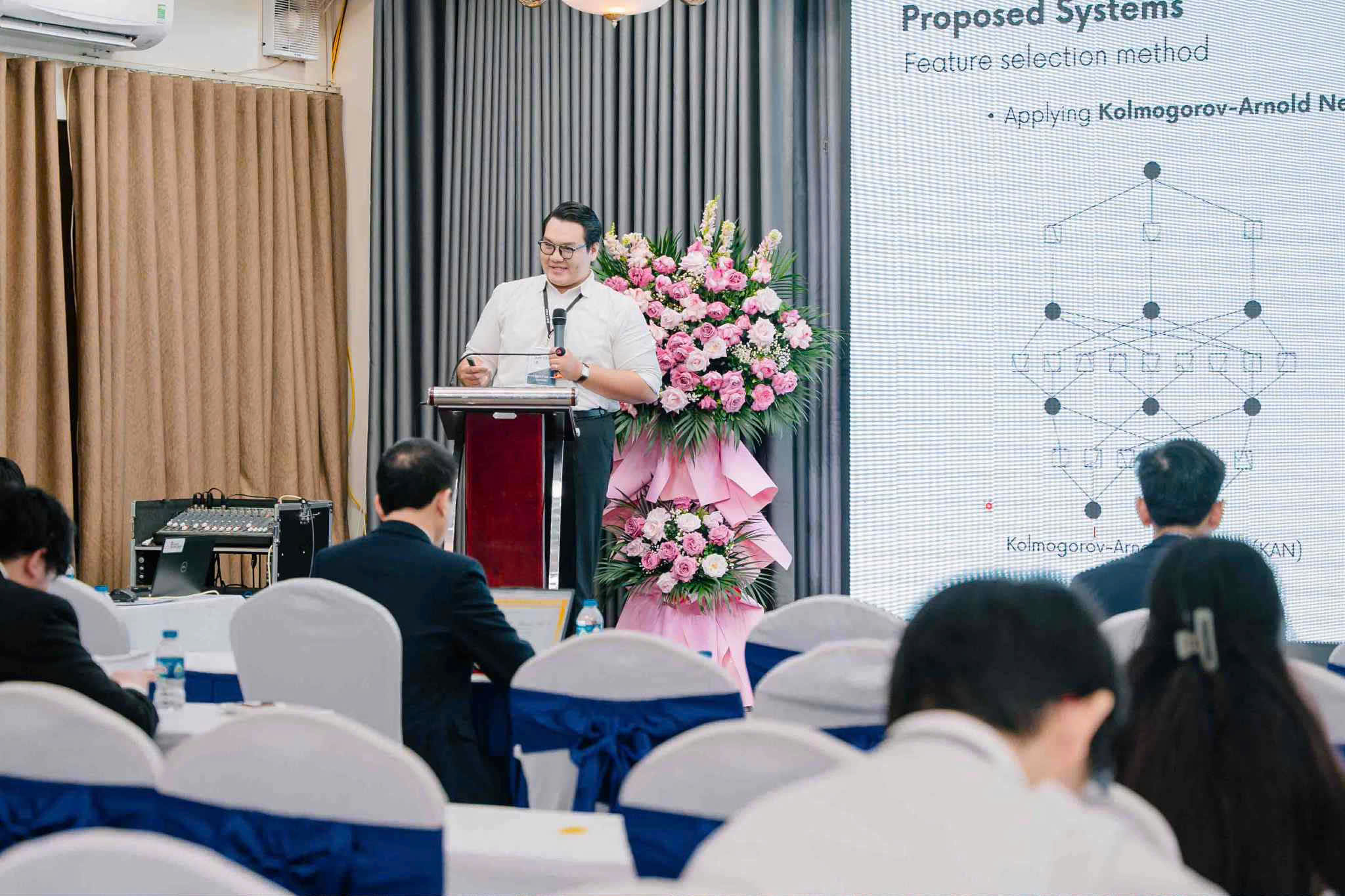
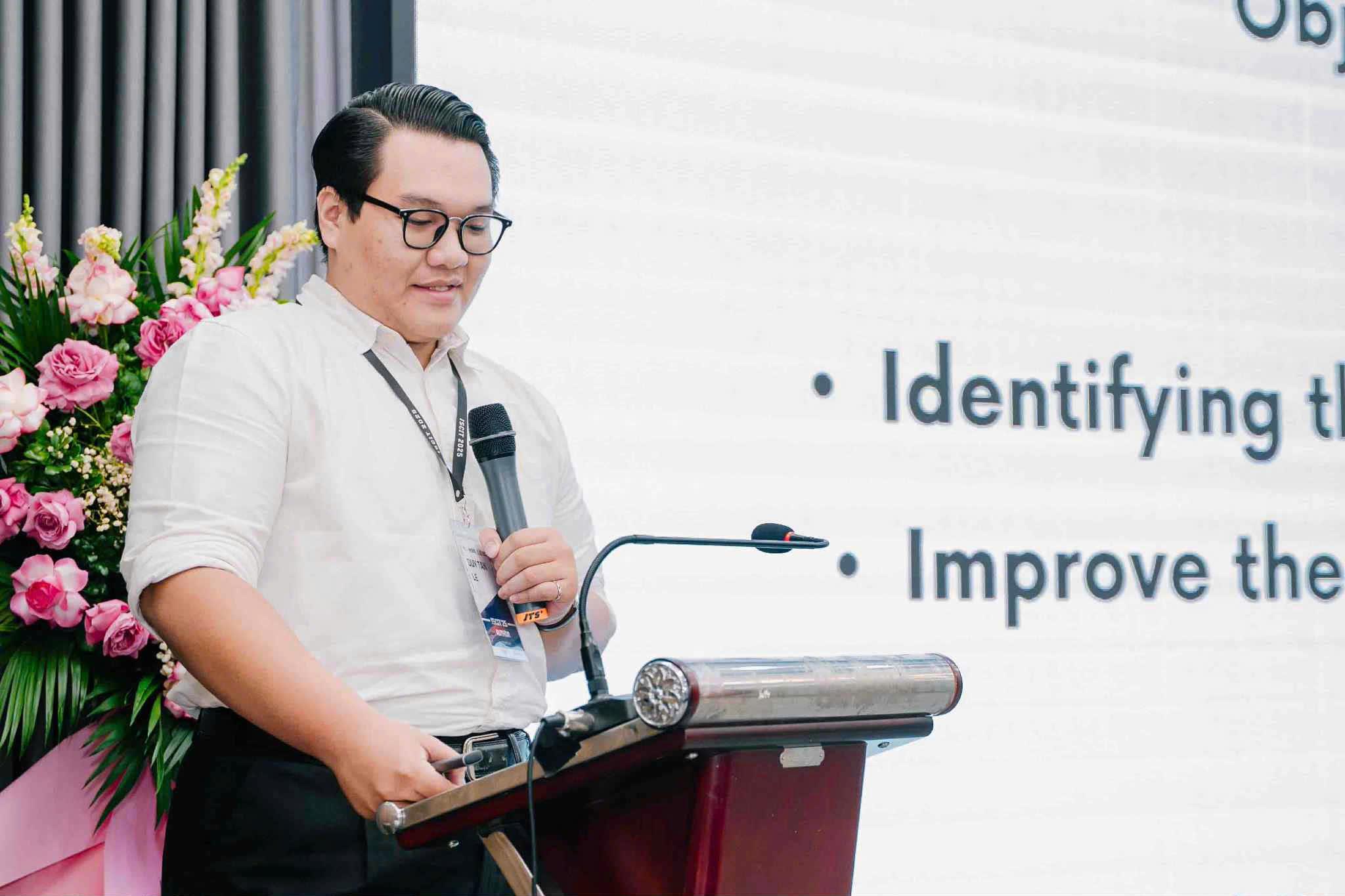
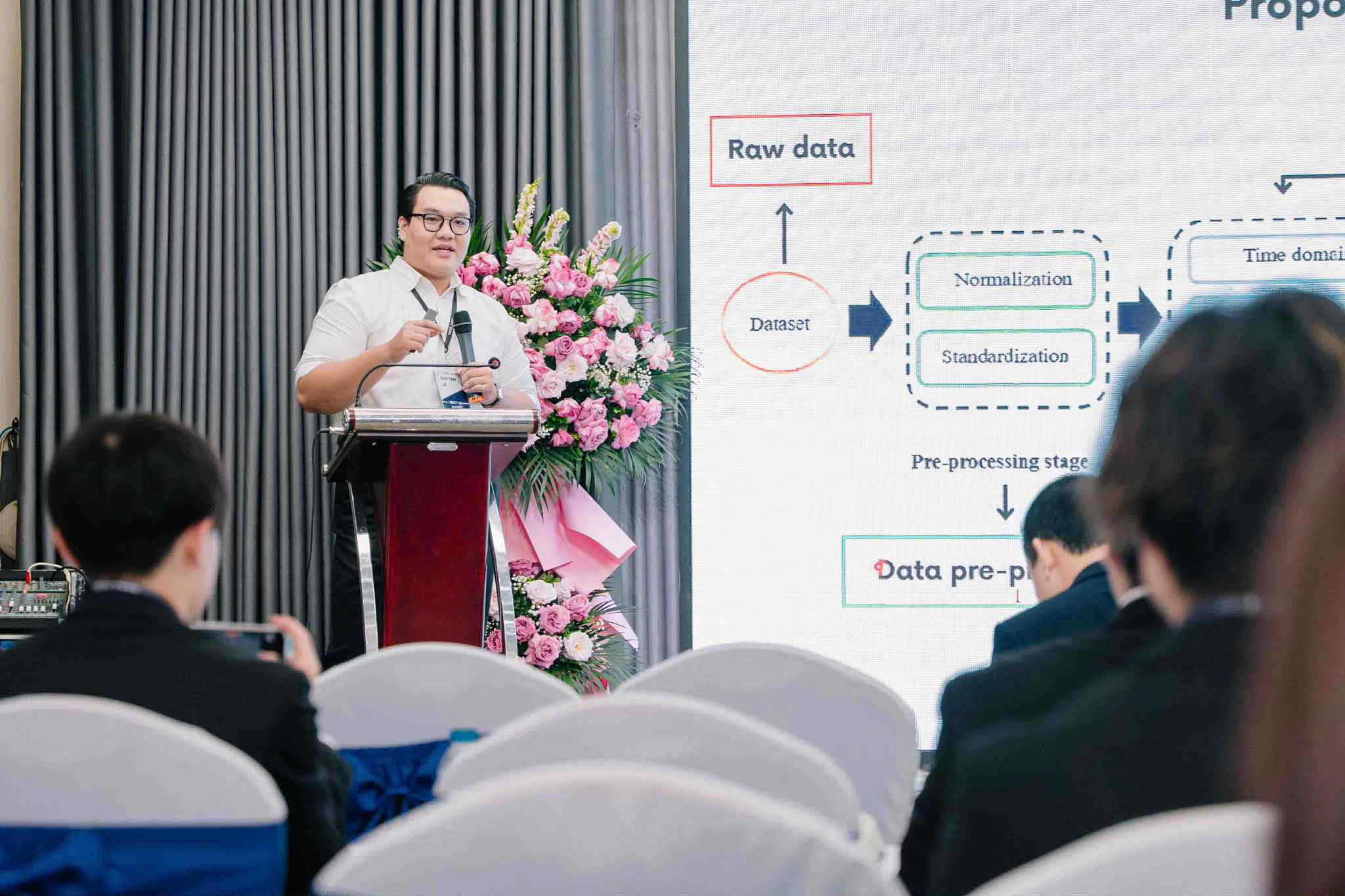
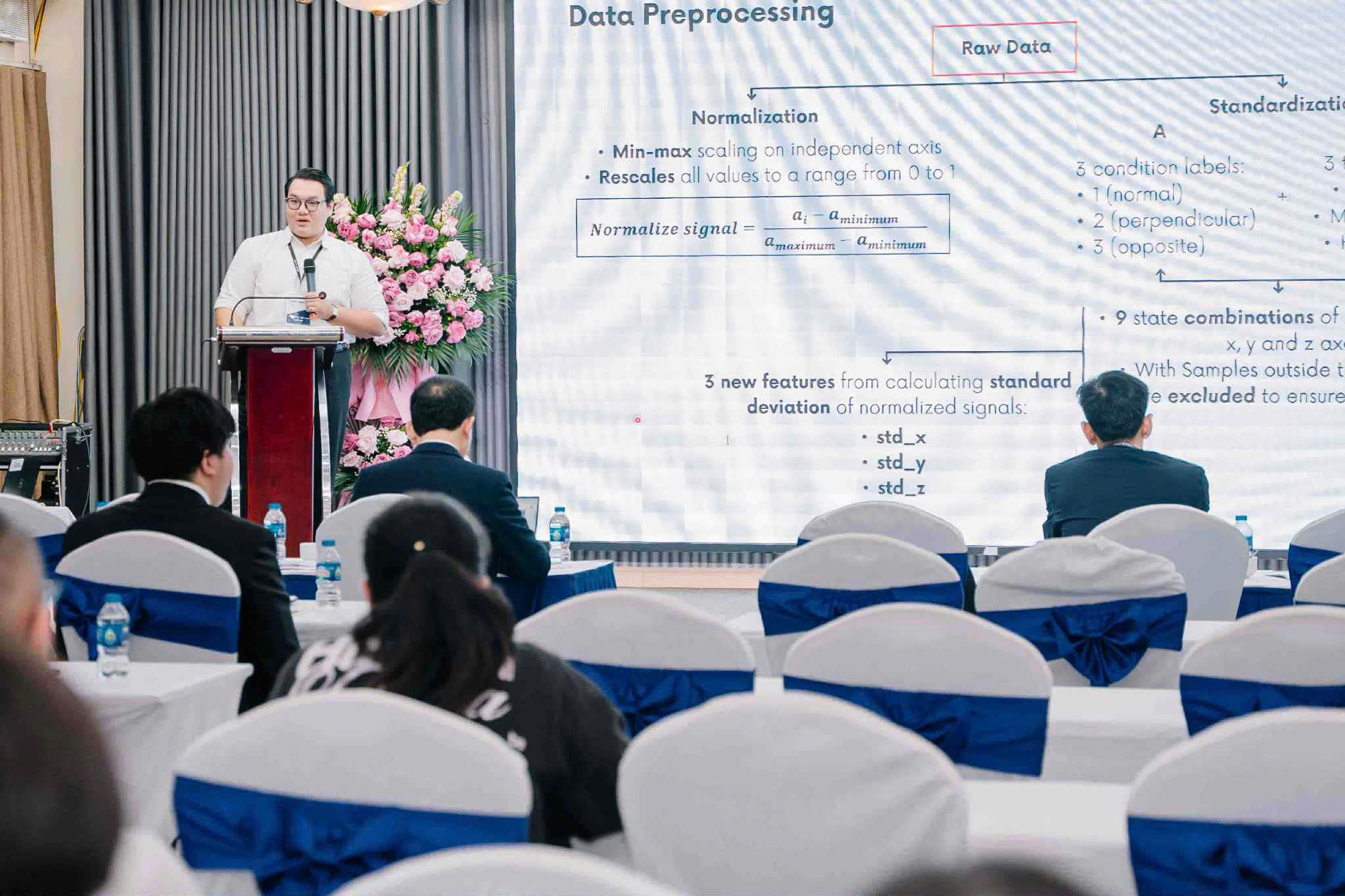
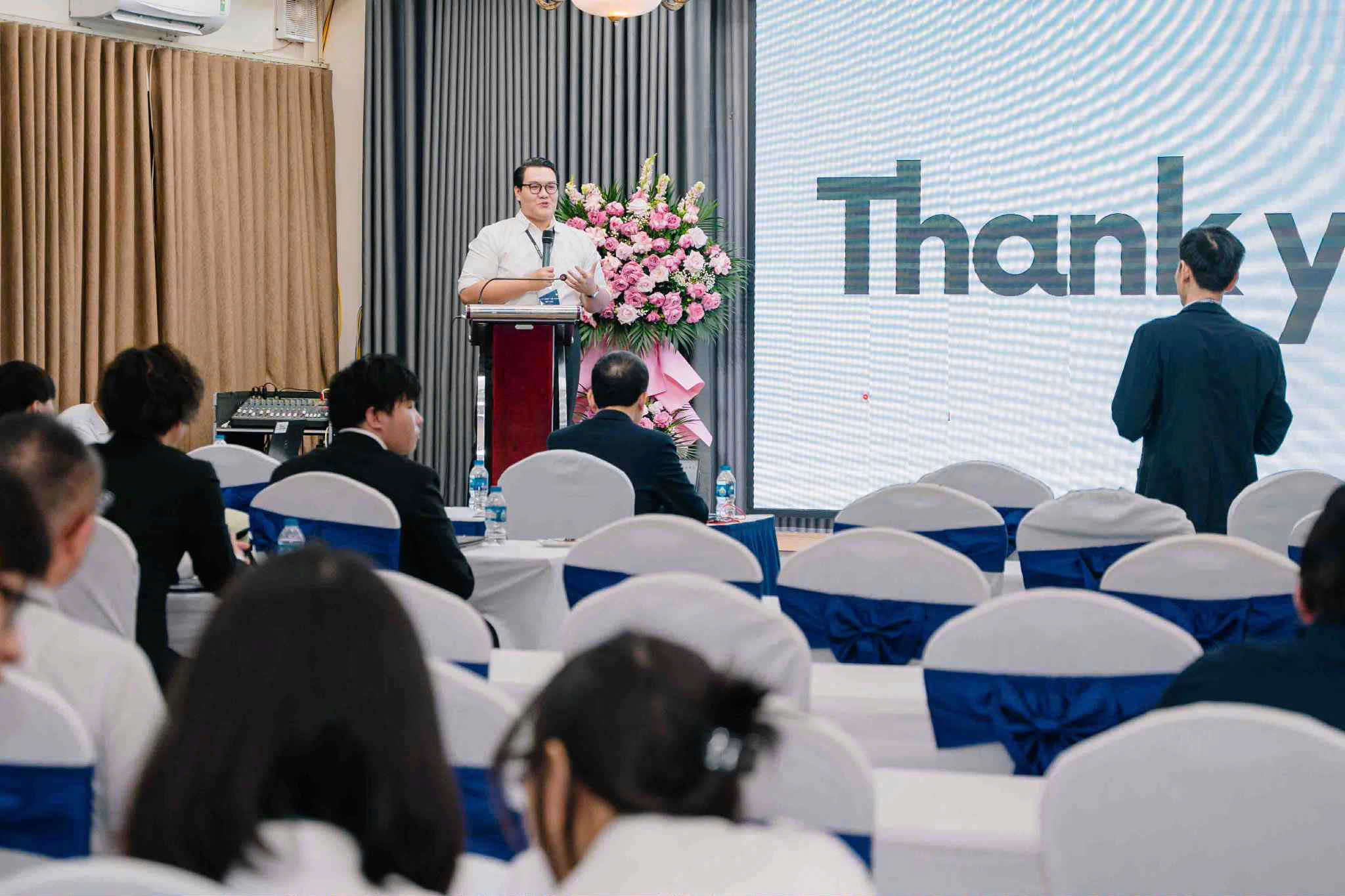
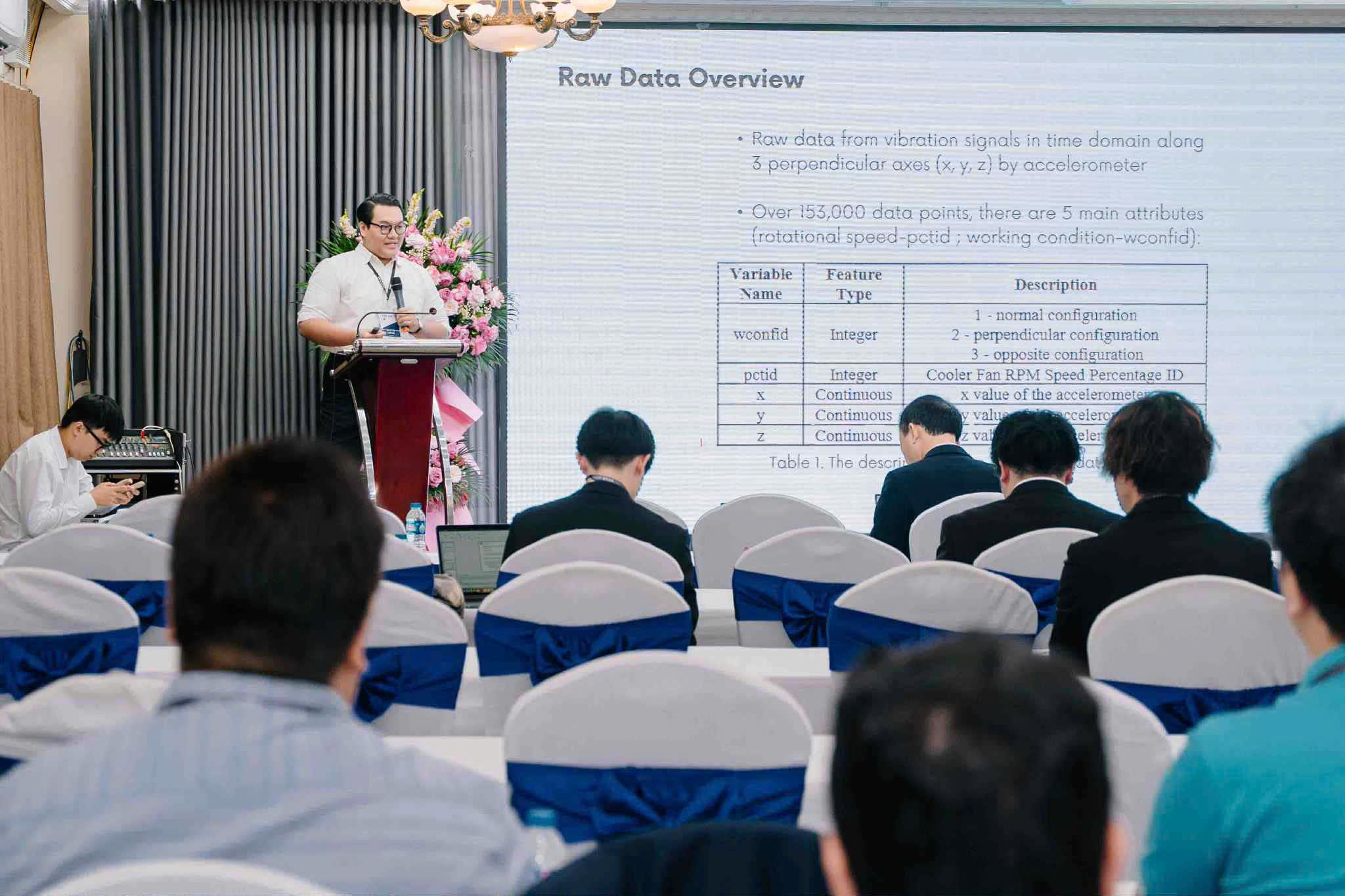
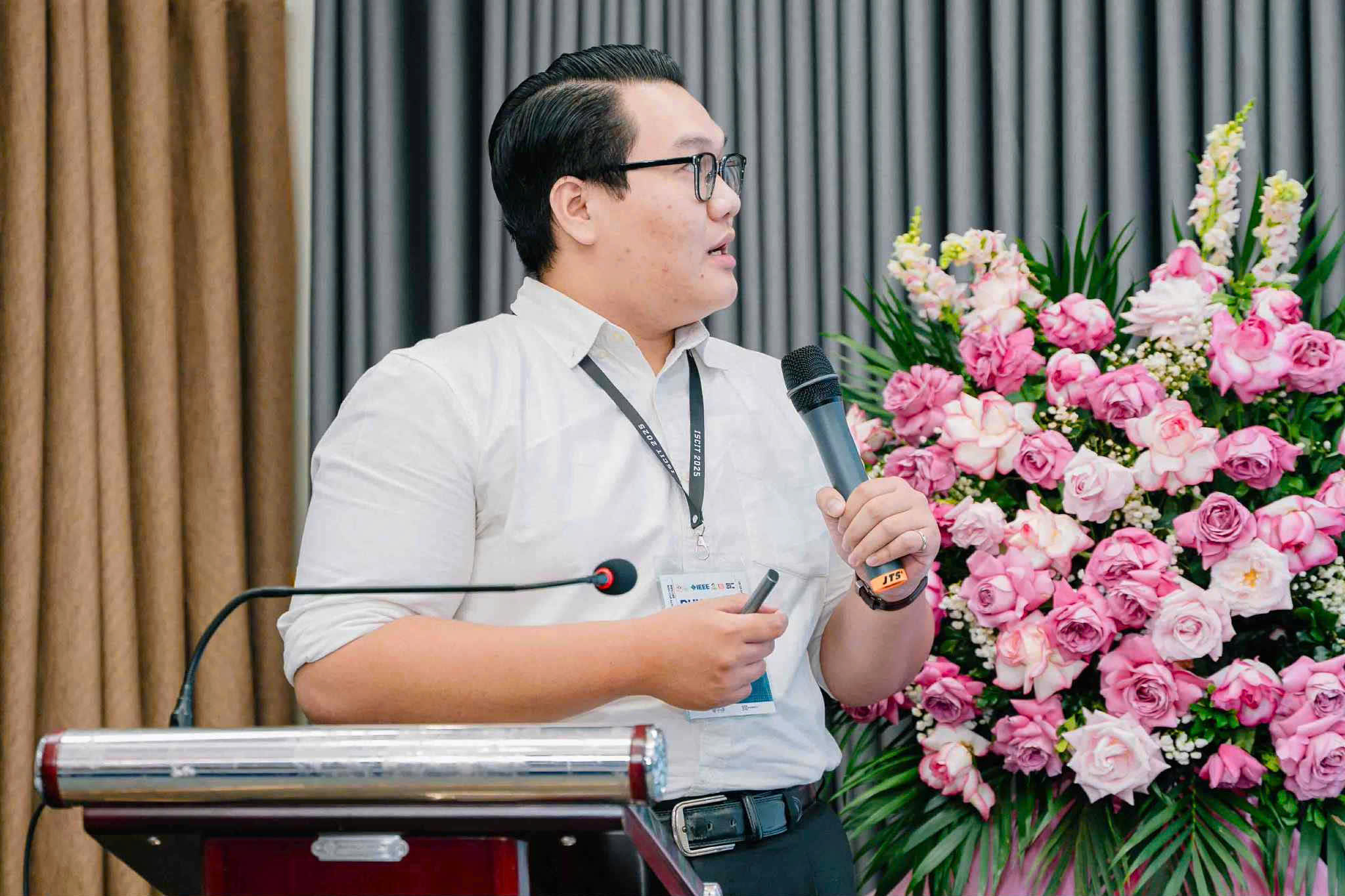
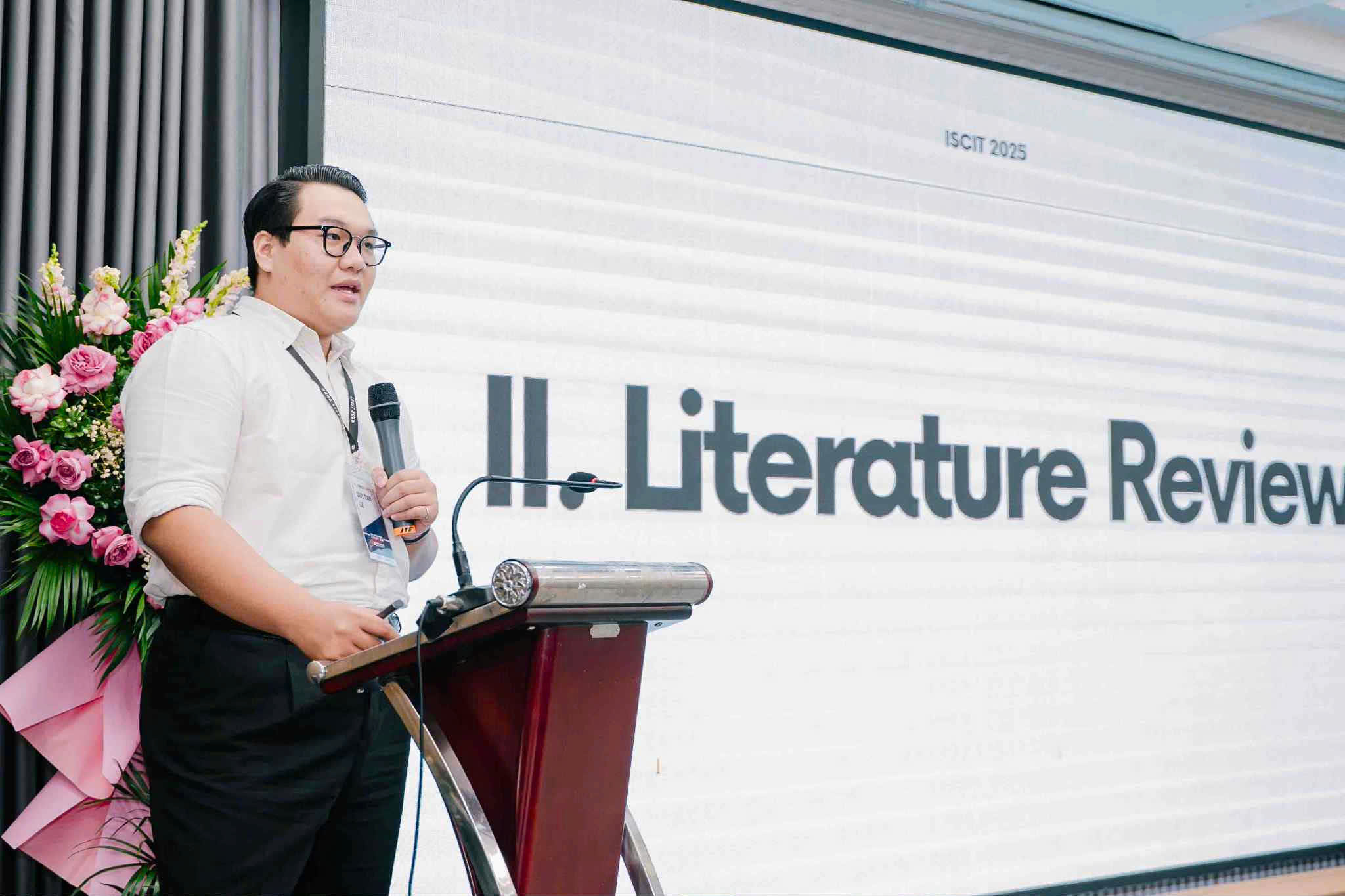
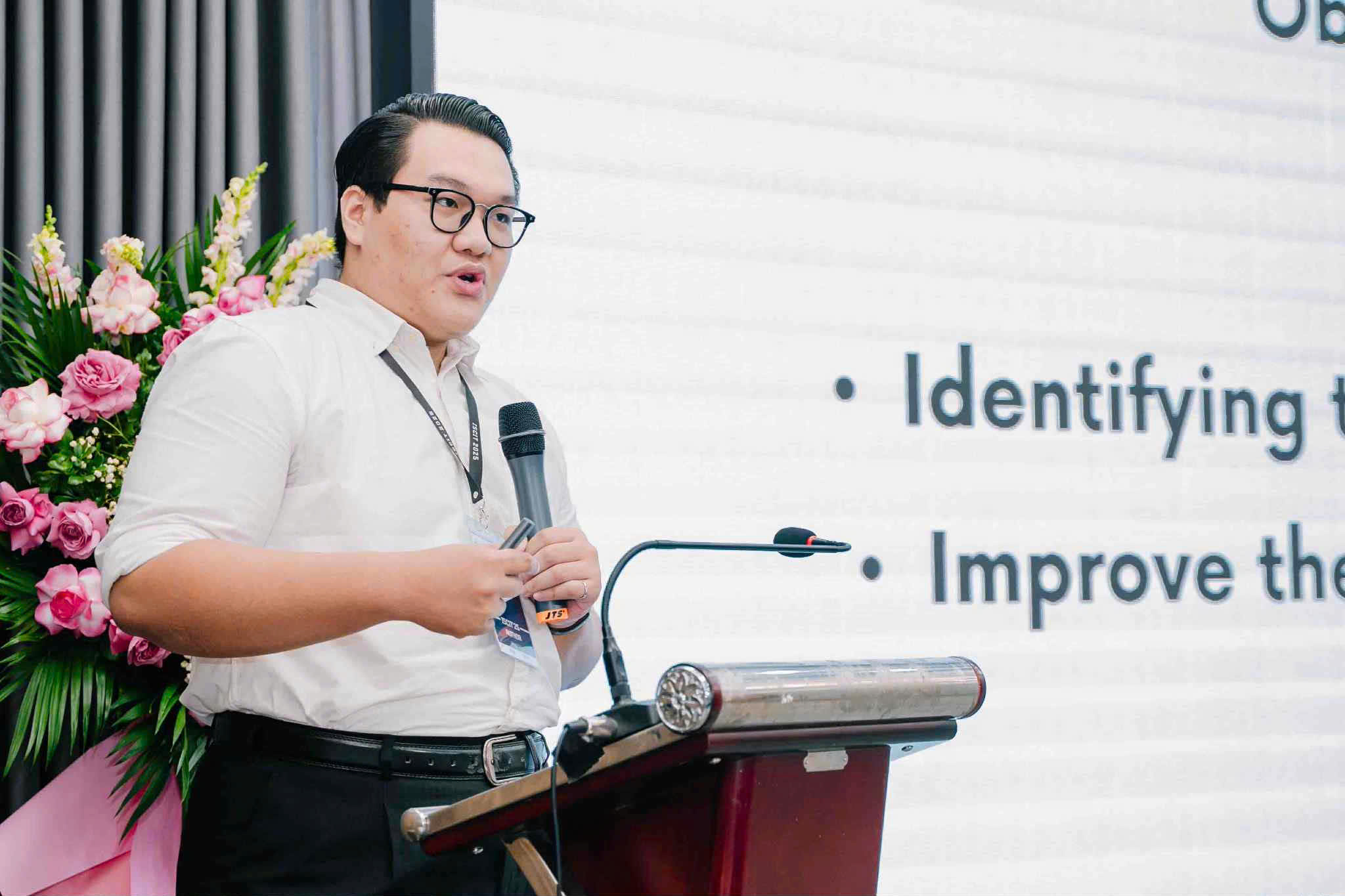
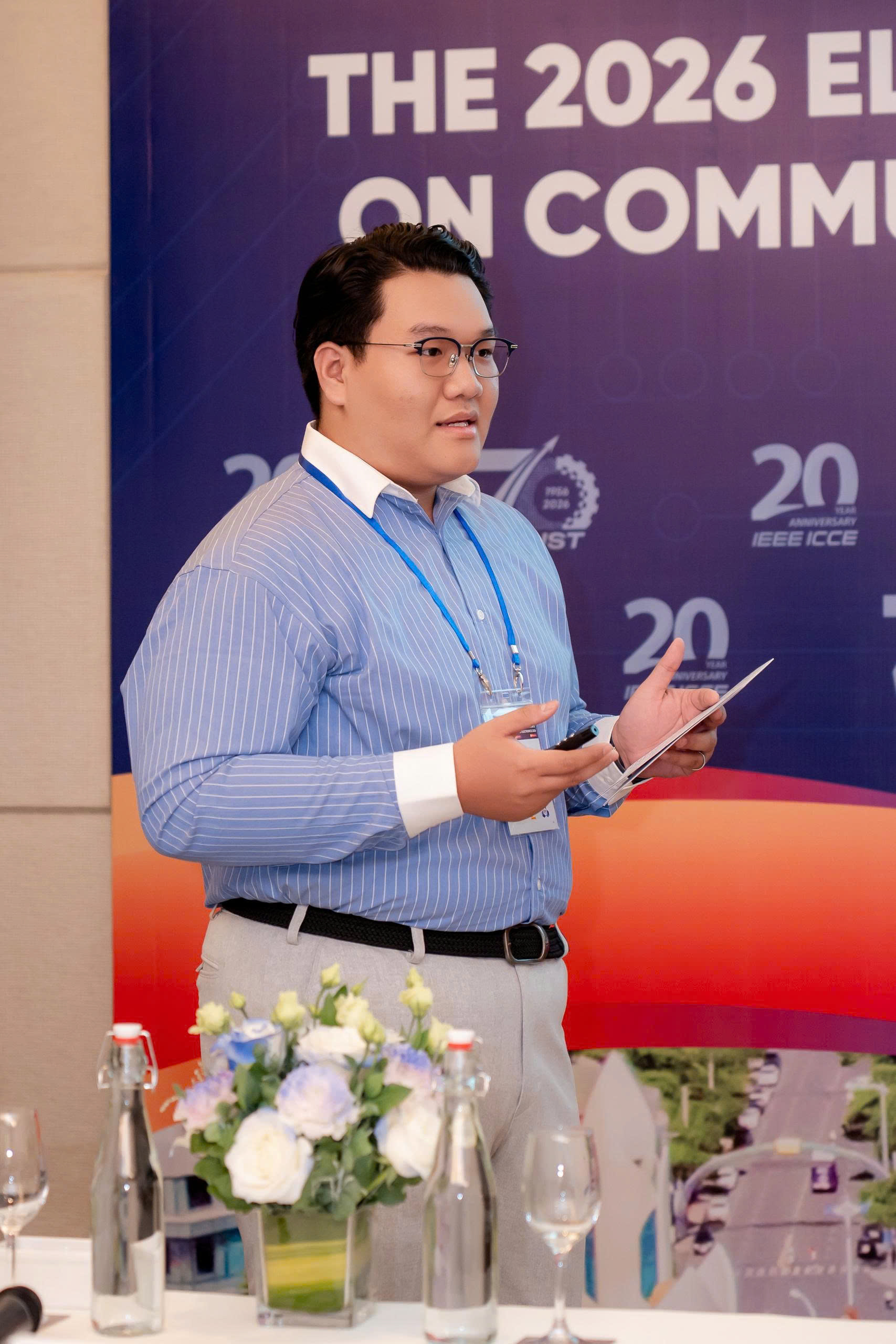
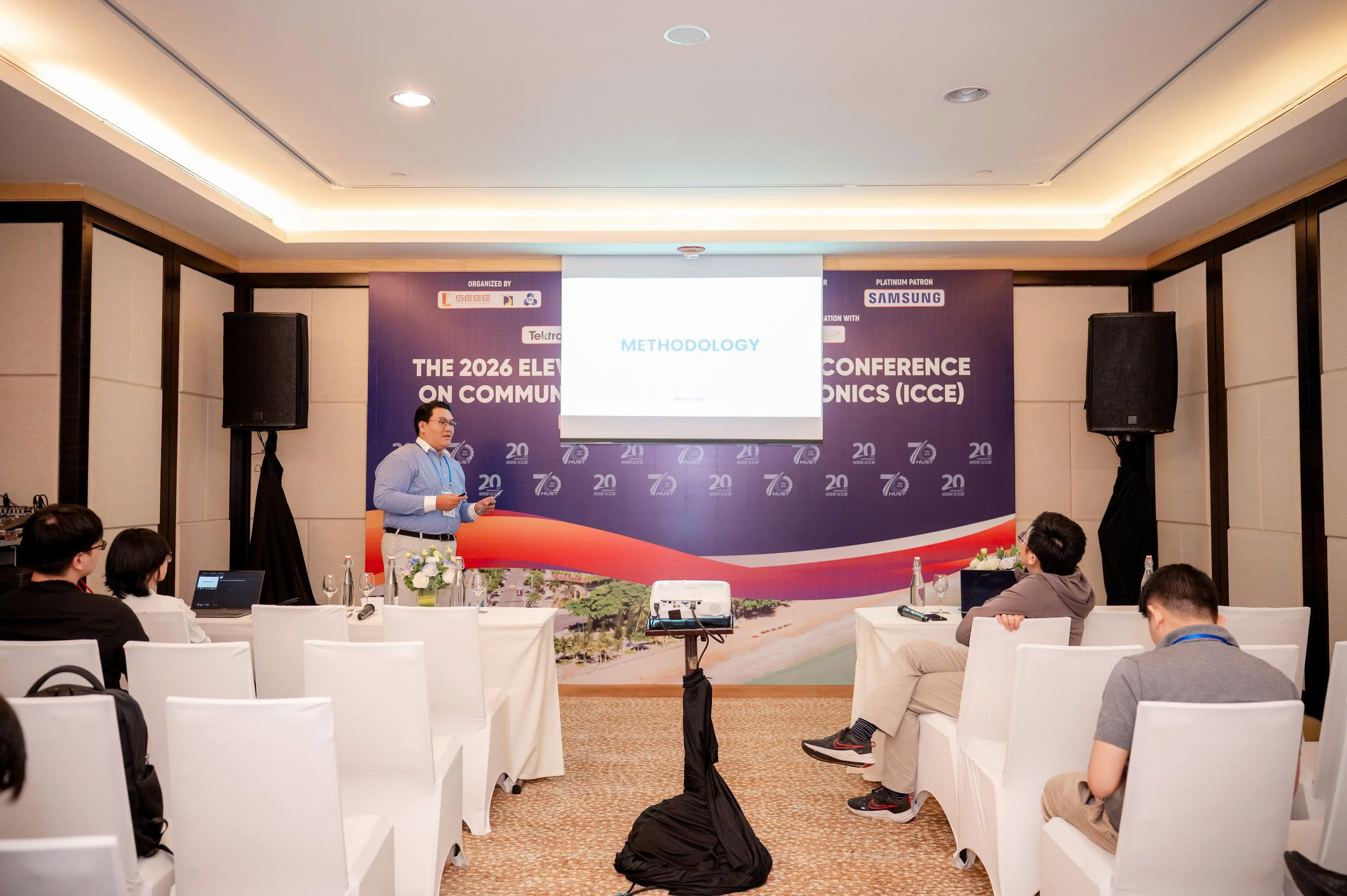
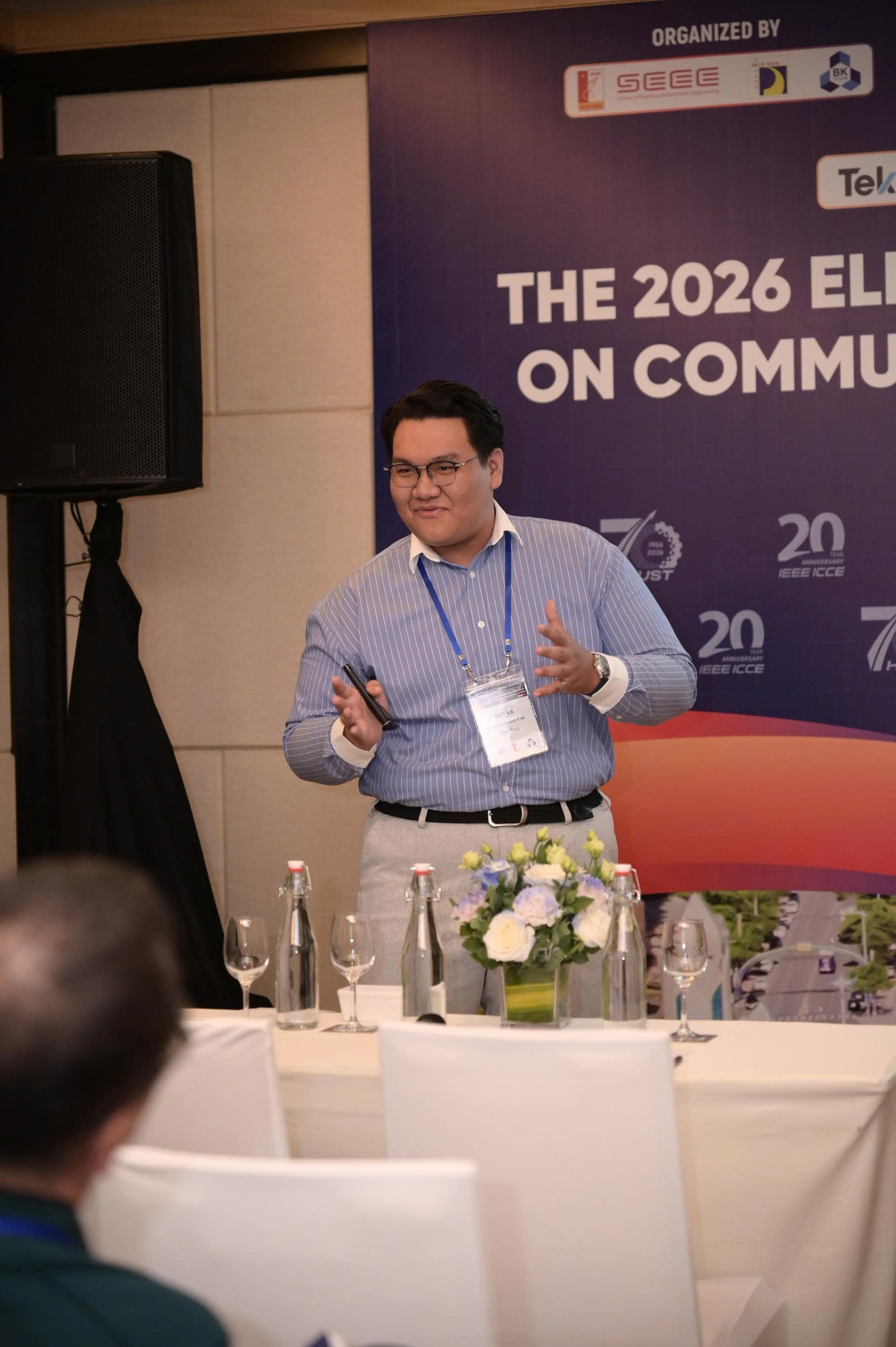
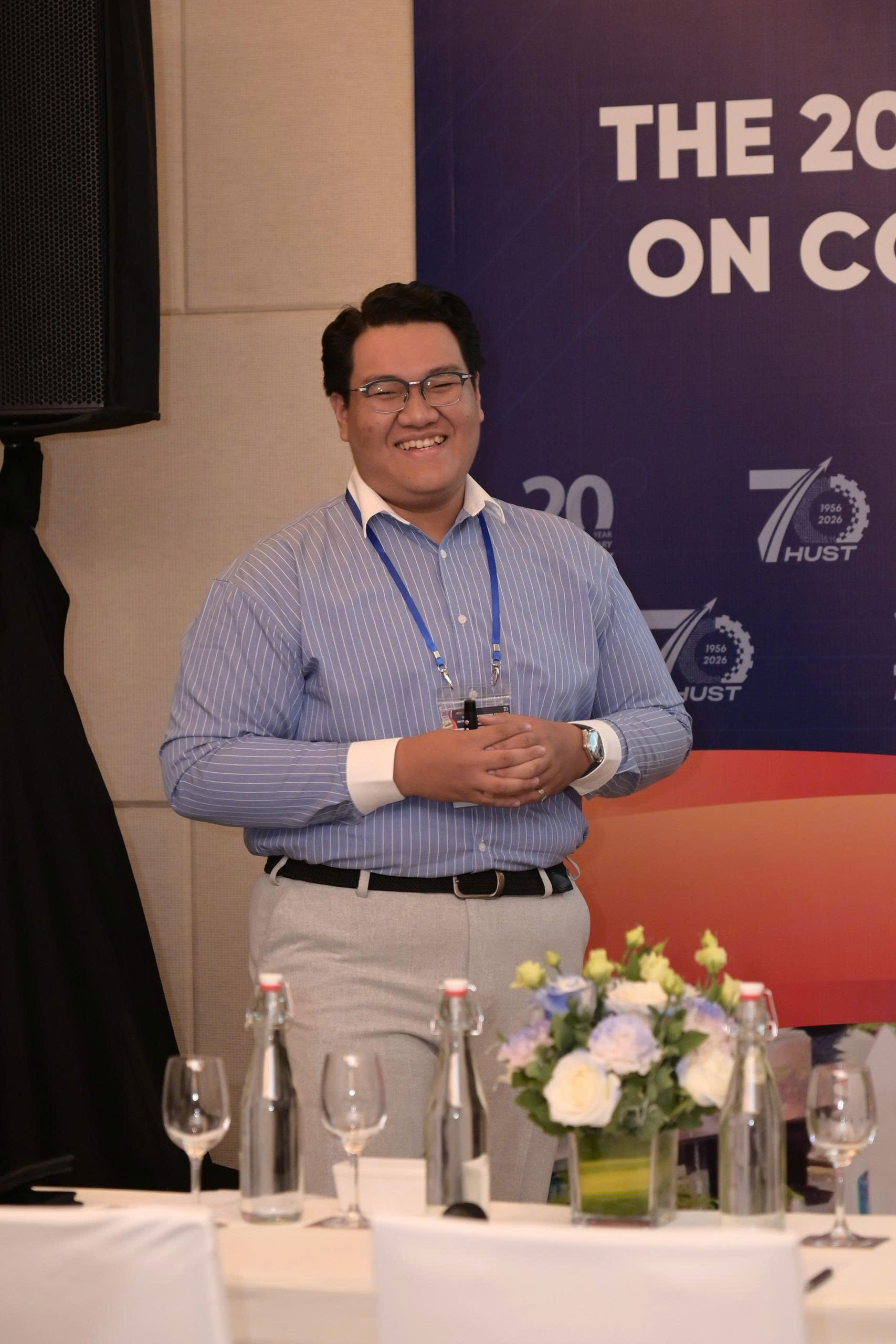
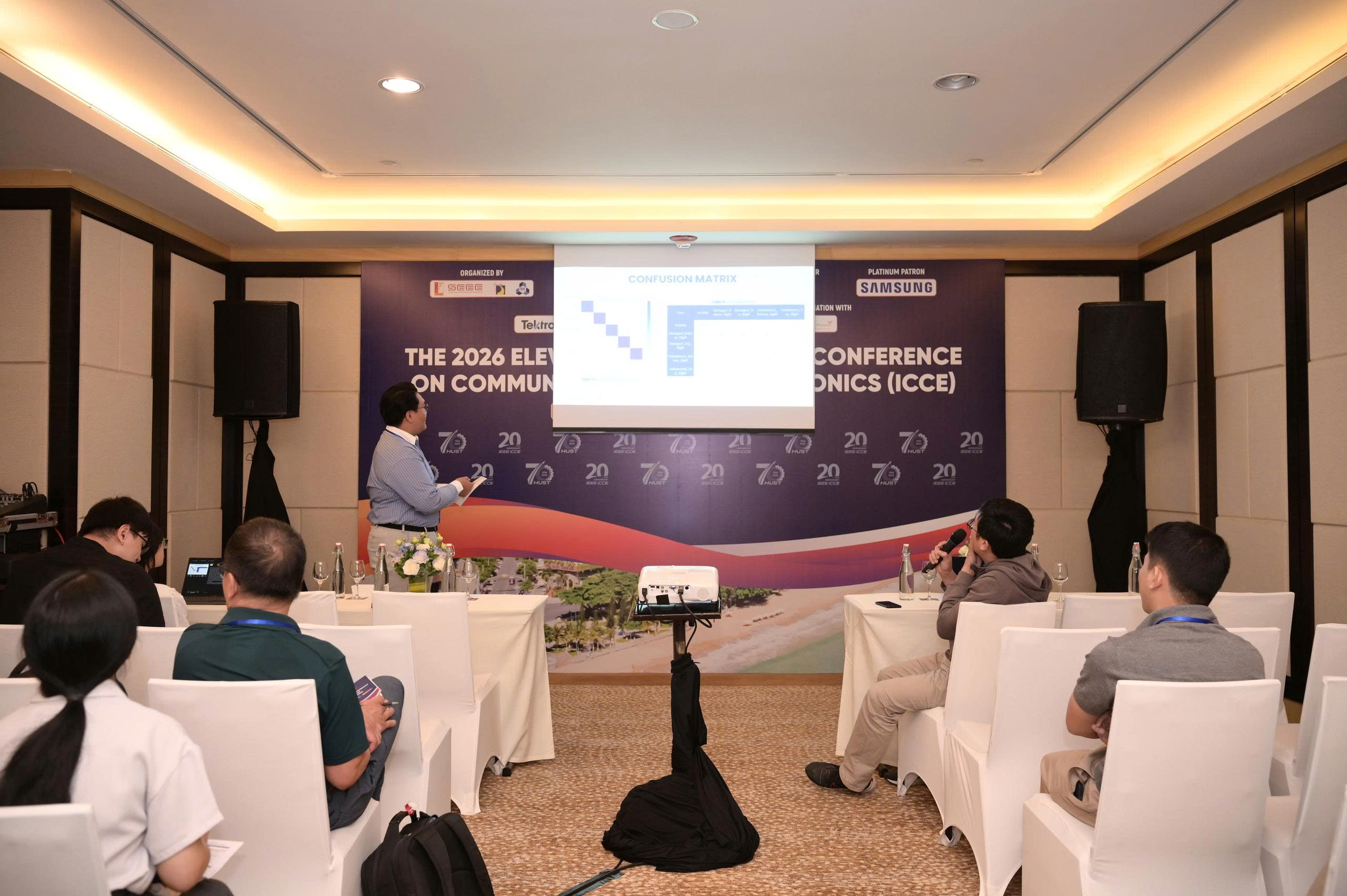
Le Tan Duy presenting his KAN-based fan motor fault diagnosis research at the 24th International Symposium on Communications and Information Technologies in Hanoi, Vietnam.
Research Interests & Skills
Research Interests
- Large Language Models (LLMs) & Transformer Architectures
- Vision-Language Models (VLMs) & Parameter-Efficient Fine-Tuning
- Model Predictive Control (MPC) and Consensus Algorithms
- Industrial Automation & Smart Diagnostic Machinery
Technical Expertise
Project Experiences
Autonomous AI-Powered Fruit-Harvesting Robot
A groundbreaking automation research project designed to modernize agricultural harvesting in Vietnam. The robot operates semi-autonomously to detect, classify, and pick ripe strawberries, reducing human exposure to hazardous farming conditions, occupational health risks (pesticides, machinery accidents), and resource wastage. Developed under the supervision of Dr. Pham Trung Kien.
Computing & Vision Stack
- Dual-CPU System: Raspberry Pi 5 + Arduino Mega 2560
- YOLOv8 Computer Vision: High-speed real-time ripe strawberry detection
- Path Tracking: PID line-following using FC-51 IR sensor array
Mechanical & Propulsion
- 4-DOF Arm: Custom 3D-printed robotic manipulator arm
- Chassis Structure: Durable 20x20 shaped aluminum framework
- Mobility: Direct DC gear motors with rear swivel casters
Realistic Constraints
Motor Control, Modeling & Telemetry
Designed an induction motor plant, implementing Siemens S7-1500 PLC control, TIA Portal HMI, and SCADA systems. Developed high-fidelity vibration measurement telemetry systems to acquire data and deployed Transformer models to detect mechanical anomalies in motor current signals.
UAV Structural Blade Diagnostics
Developed a TabNet-based deep learning model designed for structural health monitoring of high-speed rotating UAV blades. Succeeded in capturing micro-faults and material degradation from multi-dimensional tabular telemetry datasets.
VLM Parameter-Efficient Fine-Tuning
Collaborated on researching lightweight fine-tuning (QLoRA / PEFT) methods for Vision-Language Models (VLMs). Focused on accelerating multi-modal performance and automated classification tasks in highly constrained embedded environments.
MPC-Based Consensus Controls
Researched and implemented Model Predictive Control (MPC) based consensus algorithms for multi-agent three-phase electrical systems. Aimed at optimizing load balancing, grid stabilization, and coordinated power delivery.
Publications
Abstract & Methodology: Multirotor Unmanned Aerial Vehicles (UAVs) operating under demanding flight regimes are highly susceptible to rotor blade faults and aerodynamic degradation. This research presents a comprehensive fault diagnosis framework utilizing fusion multi-domain feature extraction alongside Deep Neural Networks for Tabular Data (TabNet) to achieve robust, real-time defect identification and structural health monitoring for multirotor UAV systems.
Abstract & Methodology: High-performance rotating machines in industry face severe vibration and bearing faults under harsh environments. This research presents a comprehensive predictive maintenance framework utilizing multi-domain statistical feature extraction (time, frequency, and time-frequency domains) on triaxial accelerometer vibration telemetry. By applying a Kolmogorov-Arnold Network (KAN)—novel neural architectures based on the Kolmogorov-Arnold superposition theorem—the framework performs adaptive feature selection and high-accuracy classification.
- Feature Optimization: Wrapper-based feature selection reduces redundancy, narrowing the data down to 82 high-impact multi-domain features.
- Benchmarked Accuracy: Achieved an outstanding macro-averaged F1-score of 95%, significantly outperforming traditional classifiers like Random Forest, Multilayer Perceptron (MLP), CatBoost, and Support Vector Machines (SVM).
- Edge Deployment Ready: Optimized for low-computational footprint, preparing the framework for integration onto embedded computing platforms like NVIDIA Jetson nodes.
Aspirations: Setting Sail
"Grounded in gratitude, guided by artificial intelligence, and driven to explore global frontiers."
Having built a solid scientific foundation at the School of Electrical Engineering at VNU-HCM International University and the PLC & SCADA Laboratory, I hold a deep love and respect for my hometown and roots. Vietnam is where my intellectual journey was nurtured.
However, as a graduating senior, I feel a profound calling to set sail with my academic boat, leaving familiar shores to explore and discover the world's greatest frontiers of science and technology.
My sail is catching the winds of Artificial Intelligence—specifically the cognitive power of Transformers, Kolmogorov-Arnold Networks (KANs), and advanced control systems. These AI techniques serve as both my propulsion and my compass, guiding my boat through the uncharted, multi-dimensional waters of tomorrow's industrial and computational challenges.